Fraud is not getting easier to catch; it’s getting easier to commit.
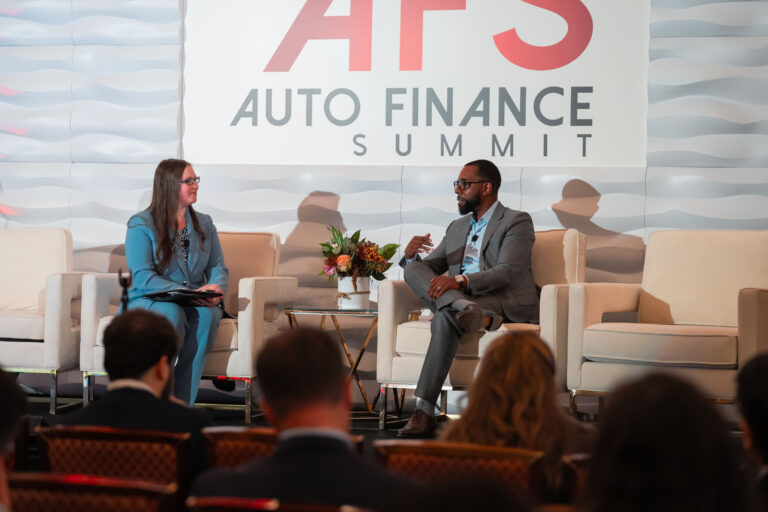
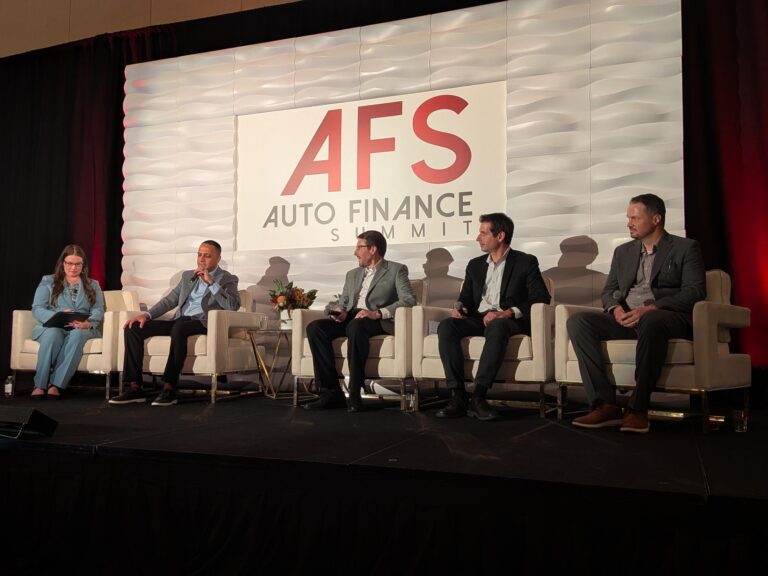
I recently joined Gaurav Goyal, head of auto originations strategy and analytics at Wells Fargo, for a conversation on how the fraud landscape has shifted and what lenders are doing about it.
Watch the full webinar with Wells Fargo’s Gaurav Goyal here
Gaurav has spent more than 18 years in auto finance across Ally Financial, Capital One and USAA. What he shared was direct, and a lot of it should change how lenders are thinking right now.
Numbers not moving in right direction
Informed’s 2026 Auto Finance Fraud Intelligence Survey of more than 2,500 executives puts the environment in context.
Auto loan fraud losses reached $9.2 billion in 2024, a record high. One in five paystubs submitted today is estimated to be forged. Eighty percent of lenders report little or no confidence detecting AI-generated document fraud.
Gaurav put the shift in historical terms. Before the pandemic, auto fraud was largely contained to the dealership floor. A borrower had to show up in person, present ID and interact face to face.
That friction is gone, and the fraud environment changed with it.
Digital channels combined with AI tools that make document fabrication trivially easy changed the entire threat surface. Proof of income, proof of residence, even driver’s licenses, are now being generated from templates.
Gaurav described sitting in front of five AI-generated identity documents with pictures and being unable to identify a single fake. The fraud that used to require dealer complicity now requires only a device and an internet connection.
Hiring more people not the answer
The scale of the problem leads most lenders to the same conclusion — the instinct to add more reviewers. Gaurav explained that auto is a cost-sensitive, operational business, and staffing your way to fraud detection at scale is not a viable strategy.
AI detects font variance, metadata changes and template-generated paystubs at a level no human reviewer can match. Pattern recognition runs across thousands of applications simultaneously rather than file by file.
Human teams transition to oversight and exception handling, rather than front-line review of every document.
The result at Wells Fargo has been substantial. More than half of fraud team resources now sit before the funding stage. Post-booking review is a fraction of what it once was.
But even a well-resourced fraud team cannot see what happens at another lender’s desk.
Bust-out rings smarter than any single lender
Synthetic identities look like prime borrowers for months before executing. Bust-out rings rotate deliberately across institutions so no single lender sees enough volume to trigger a flag.
Fraudsters direct dealers to send one deal to a large bank, the next to a credit union, the third to a captive. No single lender has the view to connect them.
Gaurav had a specific example. He described tracking a fraudster who pulled vehicles from three unrelated OEMs — a luxury brand, a minivan and a daily commuter sedan — using the same employer information across all three. Without cross-lender data, none of the institutions involved could have made the connection.
Cross-lender fraud intelligence sharing is growing, but regulatory and privacy questions are not fully resolved. What is changing the calculus is bust-out fraud hitting smaller credit unions and regional banks. Their data matters, and the industry is starting to recognize that.
Document requirement part of problem
That conversation led to a point worth sitting with; requiring a document does not mean the document is trustworthy.
When a borrower is required to produce income documentation, there is already negative selection at work. Well-qualified borrowers were cleared without one. And because fabrication is now so easy, the document a lender receives may tell them less than its absence would.
Wells Fargo is actively moving verification to earlier in the funnel, substituting income modeling, historical payment behavior and employment database verification that requires no borrower-produced documents.
The destination is a different model entirely.
Gaurav’s view on where this leads is that documentation becomes an escalation tool, used when other verification methods cannot resolve a file, not the default starting point for every application.
Always-on evaluation is new standard
One other important piece of the conversation was about how Wells Fargo thinks about the tools themselves.
A fraud model that worked 18 months ago may generate false positives today.
Gaurav described what Wells Fargo is building toward: always-on champion-challenger testing where new tools are deployed in limited dealer populations, evaluated quickly and rotated in or out as fraud patterns shift. The evaluation cycle that once took quarters now needs to move in weeks.
Auto is still a relationship business. Dedicated dealer relationships and human judgment remain part of the model, even at Wells Fargo’s scale. AI does not replace that judgment; it makes findings defensible and patterns visible before they become losses.
Fraud is not slowing down, but the tools to fight it are finally catching up.
The lenders closing the gap are building always-on intelligence into every layer of origination.
Jessica Gonzalez is the vice president of customer success at Informed.IQ and has more than 15 years’ experience in the financial services industry, including tenures at Santander Consumer USA and Visa.
Content sponsored by Informed.IQ
Kevin Reen, head of auto at Wells Fargo, will participate in a fireside chat at Auto Finance Summit 2026, the premier industry event for auto lending and leasing. The summit returns October 5-7 at Caesars Palace Las Vegas, featuring executive insights from institutions including Chase Auto, Carvana, Capital One and Hyundai Capital America. To learn more about the 2026 event and register for early-bird pricing through Aug. 21, visit www.AutoFinance.live/AFS.