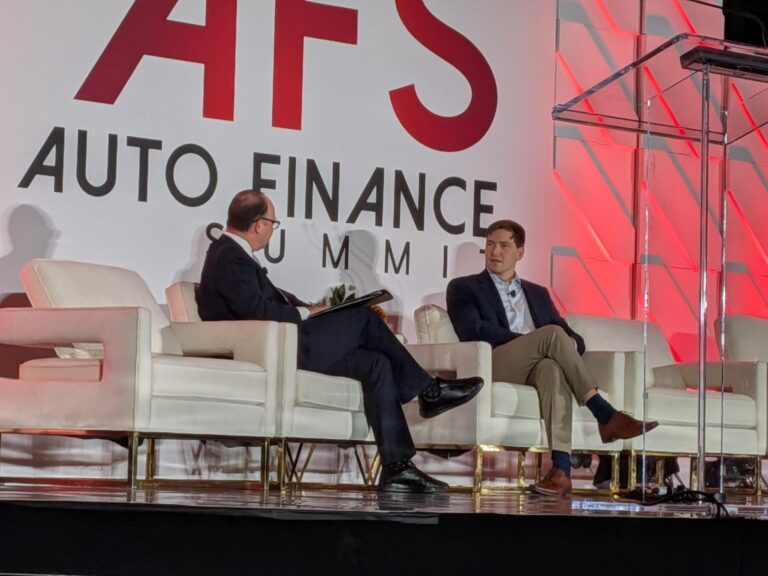
Tighter inventory management is contributing to improved performance in floorplan asset-backed securitizations alongside steady year-to-date issuance.
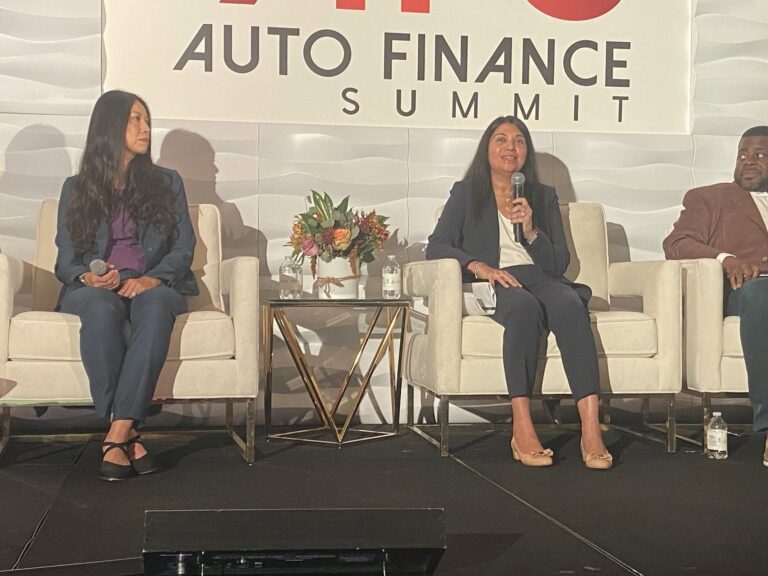
“Dealers have been much more deliberate in their approach to inventory management, reducing carrying costs and helping to sustain strong payment performance and overall balance sheet stability,” Cynthia Caine, head of Wells Fargo commercial auto, told Auto Finance News.
“Risk metrics remain healthy across our portfolio,” Caine said, noting that strong service and parts revenue continues to reinforce dealer financials.
Dealers are seeing sustained demand for maintenance and repair work as consumers keep vehicles longer, Caine said. The average age of light vehicles in the United States was 12.8 years in 2025, up from 12.6 in 2024 and 11.8 in 2019, according to data cited by the Bureau of Transportation Statistics.
“I haven’t seen anything that suggests that it’s gotten a lot newer,” Bennie Duck, chief financial officer and executive vice president at Stellantis Financial Services U.S., told AFN. “That’s an affordability issue.”
Floorplan issuance in 2026
At least six issuers priced floorplan auto asset-backed securitization (ABS) transactions YTD, according to CreditFlow, which monitors securities.
Stellantis Financial Services U.S. is targeting at least one floorplan ABS issuance annually following its inaugural deal in August, Duck told AFN at the time.
Inventory held for 120 days or less accounted for 78% of the captive’s managed portfolio as of June 30, down from 80.7% in the first half of 2025, according to an Aug. 12 Moody’s Ratings presale report.
But inventory older than one year was 0.7% through June 30, down from 4.8% from the same period last year, reflecting tighter turns.
New floorplan ABS issuance is below 2019 levels, which reflects automakers’ tighter inventory management, Jennie Lam, director at S&P Global Ratings, told AFN.
Floorplan ABS issuance totaled $5.1 billion through Sept. 18, up 112.5% YoY, according to JPMorgan Securities data.
Still, outstanding securitized balances are expected to grow as inventory turnover keeps normalizing, Lam said.
In fact, principal payment rates — a key performance indicator — that were “exceptionally high” from 2021 to 2023, “are gradually returning to more typical levels but remain well above trigger thresholds,” she said.
Most manufacturers’ inventory levels are normal or slightly elevated, far removed from pandemic-era shortages, Duck said.
“I don’t think there’s a big glut either — at least as we see it today,” he said.
Auto Finance Summit, the premier industry event for auto lending and leasing, returns October 5-7 at Caesars Palace Las Vegas, featuring executive insights from institutions including Chase Auto, Carvana, Capital One, Hyundai Capital America and Wells Fargo. To learn more about the 2026 event and register, visit www.AutoFinance.live/AFS.